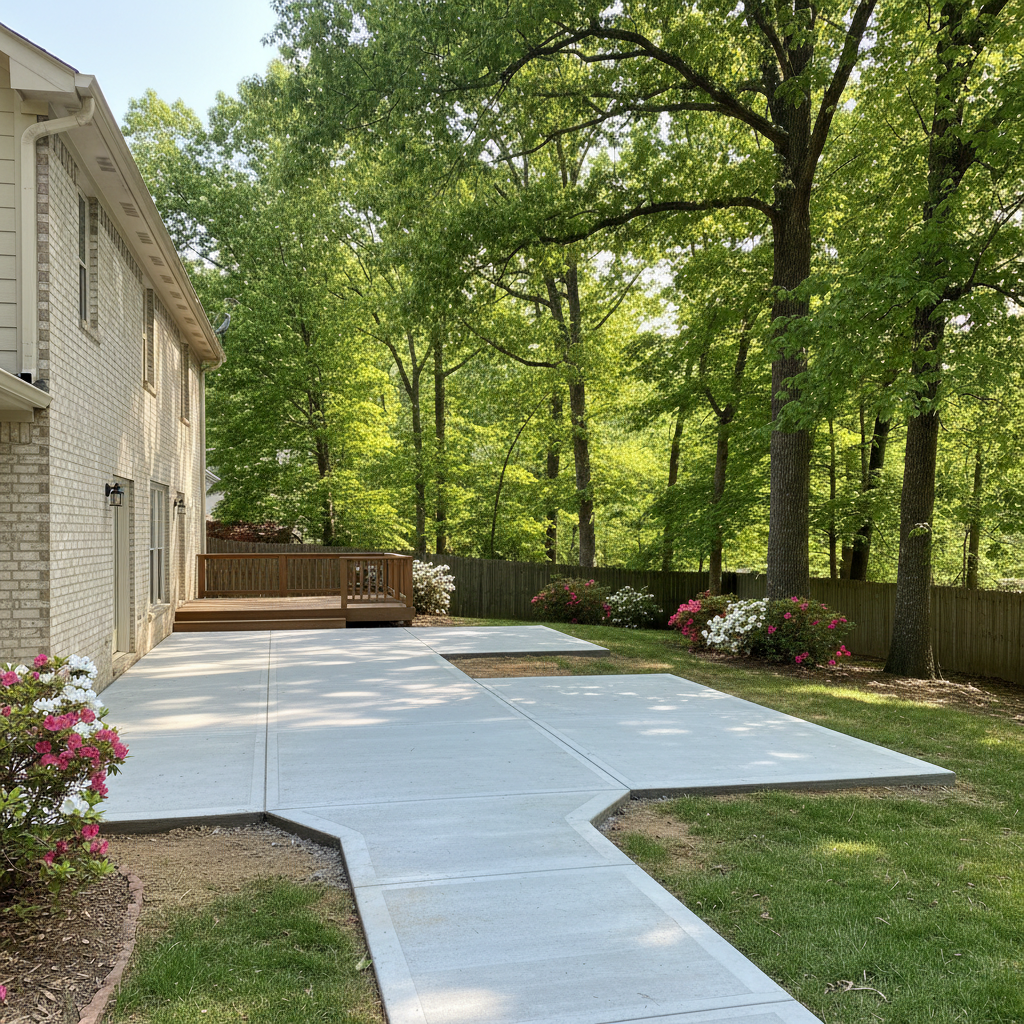
You're probably thinking about a new patio, maybe a driveway, or just how to keep your concrete looking good. Here in Olive Branch, the seasons actually play a much bigger role than you might imagine when it comes to concrete. It's not just about getting the job done; it's about doing it right so it lasts, and then taking care of it all year long.
Spring: The Sweet Spot for New Concrete
If you're planning a new concrete project, spring is usually your best bet around here. Why? Well, the ground has finally thawed out from winter, but we haven't hit the brutal heat and humidity of summer yet. Concrete needs time to cure properly, and that whole process really depends on the temperature and how much moisture is in the air.
When it's too cold, the water in the mix can freeze, and that causes all sorts of problems like making the concrete weaker and less durable. If it's too hot, the water evaporates way too fast, which leads to cracking and a weak surface. Spring gives us that Goldilocks zone – not too hot, not too cold. We're generally looking for consistent daytime temperatures between 50 and 80 degrees Fahrenheit, and spring often delivers just that. You'll also see us keeping a close eye on the forecast for rain, because fresh concrete definitely needs protection from downpours.
Summer: Proceed with Caution (and Extra Steps)
Summer in Olive Branch? That means heat and humidity. While we can certainly pour concrete during the summer, it just takes more careful planning and often a few extra steps to make sure you get a quality finish. The biggest challenge is that rapid evaporation I mentioned earlier. When the sun is beating down and the humidity is high, concrete can set too quickly, making it harder to finish right and increasing the risk of surface cracks.
If you're really set on a summer project, don't worry, it's absolutely doable. We'll use things like curing compounds or even temporary shading to protect the fresh pour. Sometimes we'll even tweak the mix design a bit to slow down the setting time. The main thing is working fast and being ready for the conditions. For existing concrete, summer's a good time for a deep clean. Power washing can blast away algae and dirt that builds up, especially in shady spots or areas with poor drainage – something we see a lot of around the older homes near the historic downtown area.
Fall: A Second Chance for Pours
Just like spring, fall offers another excellent window for concrete installation. As the scorching summer heat finally backs off, we get those ideal temperatures again. The ground is warm, but the air isn't too hot, and we usually have less extreme weather than in spring. This lets the concrete cure nice and slow, which is exactly what you want for maximum strength and how long it'll last.
For existing concrete, fall is a great time to seal it up. Sealing your concrete is honestly one of the best things you can do to protect your investment. It creates a barrier against moisture, oil, and other stains, plus it helps prevent that freeze-thaw damage that happens when water seeps into pores and then expands as it freezes. If you haven't sealed your driveway or patio in a few years, seriously, put it on your fall to-do list.
Winter: Time for Protection, Not Pours
Winter in Olive Branch can be pretty unpredictable. We might have some mild stretches, but we also get those hard freezes. As I said before, cold weather and concrete just don't mix well. We generally avoid pouring new concrete when temperatures are consistently below 40 degrees Fahrenheit, especially if there's a risk of freezing overnight. It's just not worth risking the concrete's integrity.
For your existing concrete, winter is all about protection. If you've got a newer driveway or patio, try to avoid using de-icing salts, especially rock salt (sodium chloride). These salts can be really harsh on concrete, causing scaling and surface damage. Instead, go for sand for traction or use a concrete-safe de-icer if you absolutely need one. Also, make sure your gutters are clean and directing water away from your concrete surfaces. Standing water that freezes and thaws repeatedly can really wreak havoc over time.
Year-Round Care: A Few General Tips
- Keep it Clean: Regular sweeping and occasional washing with a mild detergent can prevent stains and the buildup of organic matter, which can degrade your concrete over time.
- Watch for Cracks: Little cracks can turn into big problems. If you notice new cracks forming, especially if they're getting wider, it's smart to have a professional take a look. Sometimes they're just cosmetic, but other times they can point to a bigger issue.
- Seal Regularly: I can't emphasize this enough. Depending on the type of sealer and how much traffic your concrete sees, you should re-seal every 2-5 years. Think of it like sunscreen for your concrete.
- Mind the Drainage: Make sure water drains away from your concrete surfaces, not towards them. Proper grading is super important. If water pools on your patio or against your foundation, that's a problem that needs fixing.
Understanding how our local Olive Branch weather impacts concrete means you can make smarter decisions about when to schedule projects and how to maintain what you've already got. A little bit of seasonal awareness goes a long way in protecting your investment and keeping your concrete looking great for years to come. If you've got questions or need a hand with any of this, you know who to call – The Branch Concrete is always here to help our neighbors.