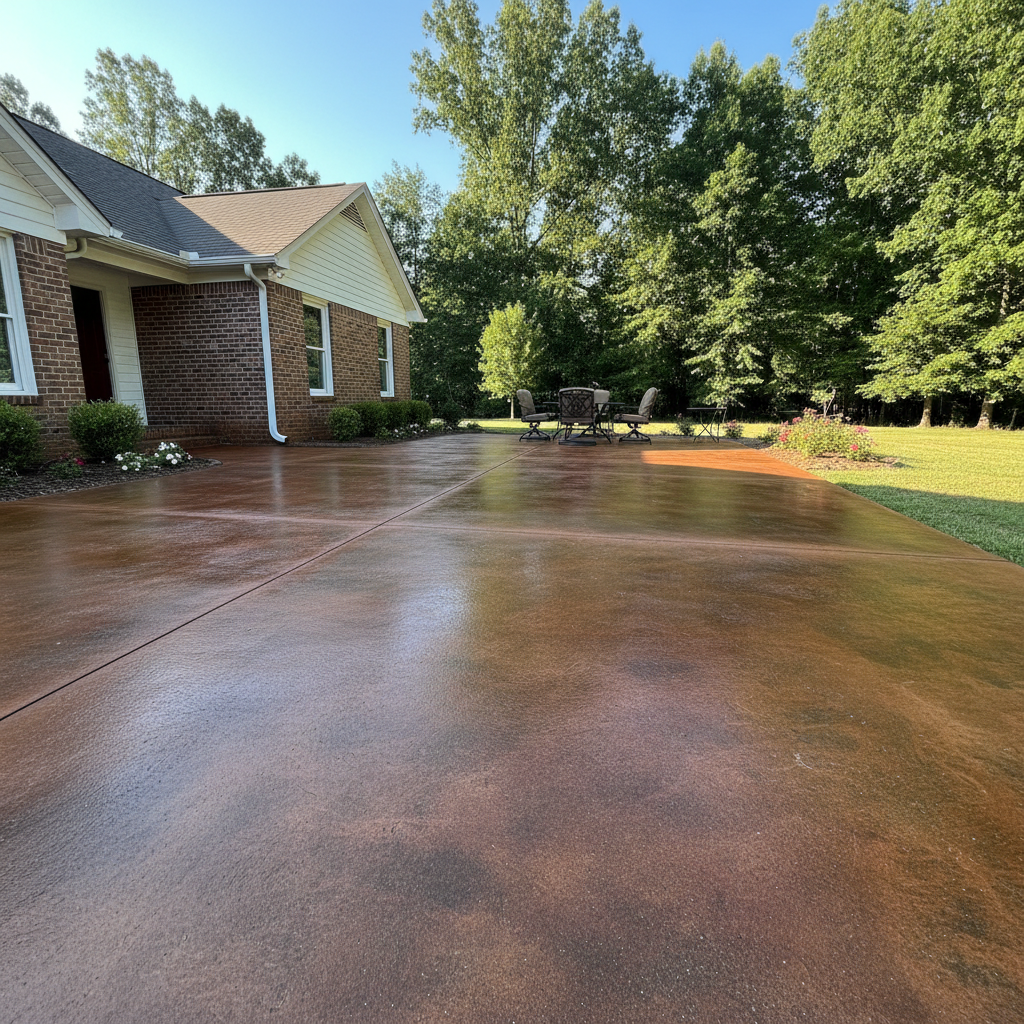
So, you've got some beautiful stained concrete, maybe it's your patio, a walkway, or even your garage floor. It looks fantastic now, right? You want to keep it that way. And you can, but it's not a 'set it and forget it' kind of deal, especially here in Olive Branch where we get all four seasons, sometimes in one week!
I've seen a lot of stained concrete over the years, and the biggest difference between the stuff that still looks great after a decade and the stuff that looks tired after just a few years? Maintenance. It's not rocket science, but it does take a little regular attention.
Extending Your Stained Concrete's Lifespan
The number one thing you can do to protect your stained concrete and make it last is to keep that sealer in good shape. Think of the sealer as the clear coat on your car's paint job. It's what protects the color from UV rays, spills, and general wear and tear. Here in Mississippi, our sun can be brutal, especially in July and August. That intense UV exposure will break down sealers faster than you might think.
For most outdoor stained concrete, I recommend resealing every 2-3 years. If it's in a high-traffic area, like a commercial space or a frequently used patio, you might even need to do it every year or two. For indoor floors, you can usually stretch it to 3-5 years. How do you know it's time? We'll get to that in a minute, but generally, if it's starting to look dull or absorb water, it's a good sign.
When you do reseal, make sure you're using a compatible sealer. If you don't know what was used originally, it's best to test a small, inconspicuous area first. Or, better yet, call up whoever did the original work – hopefully, it was a local company like The Branch Concrete – and ask them. They'll know exactly what to use.
Regular Maintenance: It's Easier Than You Think
Keeping your stained concrete clean is the easiest and most effective way to keep it looking good. For outdoor surfaces, just sweep or blow off leaves and dirt regularly. Don't let organic matter sit and decompose on the surface, especially after our frequent thunderstorms. That stuff can stain if left too long.
For a deeper clean, a hose and a mild detergent are usually all you need. Dish soap works fine for most spills. Just make sure it's pH-neutral. Stay away from harsh chemicals like bleach, ammonia, or anything acidic, because those can damage the sealer and even the stain itself. For tough spots, a soft brush can help, but don't use anything abrasive like a wire brush or steel wool; those will scratch your sealer.
Indoors, a damp mop with a pH-neutral cleaner is perfect. Just like outside, avoid harsh chemicals. And if you spill something, clean it up quickly. Even with a good sealer, some things, especially oils, red wine, or pet accidents, can eventually penetrate if left to sit.
One more thing about our climate: we get a lot of humidity. This can sometimes lead to mildew growth on outdoor stained concrete, especially in shady spots or areas that don't dry out quickly, like under an awning in a backyard in Olive Branch. A solution of water and a little white vinegar can often take care of that. Just rinse it thoroughly afterward.
Warning Signs of Trouble
How do you know if your stained concrete needs more than just a quick clean? Here are a few things to watch out for:
- Dull Spots or Fading: If areas that used to be shiny are now dull, or the color seems less vibrant, your sealer is probably wearing down. This is usually the first sign it's time to reseal.
- Water Absorption: Pour a little water on the surface. If it beads up, your sealer is still doing its job. If it soaks in and darkens the concrete, it's definitely time to reseal. This is critical because water getting into the concrete can lead to bigger problems down the road, like freeze-thaw damage in winter.
- Peeling or Flaking Sealer: This is a clear sign the sealer has failed. It might be due to improper application initially, or just old age and wear. You'll see bits of the clear coat coming off.
- Cracks or Chips: Concrete is tough, but it can crack or chip. Small hairline cracks might not be a huge deal, but if they start to widen or if you see pieces breaking off, that's a problem.
- Persistent Stains: If you're cleaning regularly but still getting stains that won't come out, it means the sealer isn't protecting the concrete like it should.
When to Call a Professional
Look, you can handle most routine cleaning and even some resealing yourself. But there are times when it's best to call in the pros. If you see widespread peeling or flaking, significant cracking, or if you're not sure what kind of sealer to use, that's when you should pick up the phone.
Trying to fix a failed sealer without knowing what you're doing can make things worse. You might need to strip the old sealer before applying a new one, and that's a job that requires specific chemicals and know-how. If you've got large cracks, those need to be properly repaired and sealed to prevent water intrusion and further damage. Sometimes, if the stain itself has faded significantly or been damaged, a professional might be able to re-stain or touch up areas. Don't hesitate to reach out if you're unsure. We're here to help keep your concrete looking great for years to come.