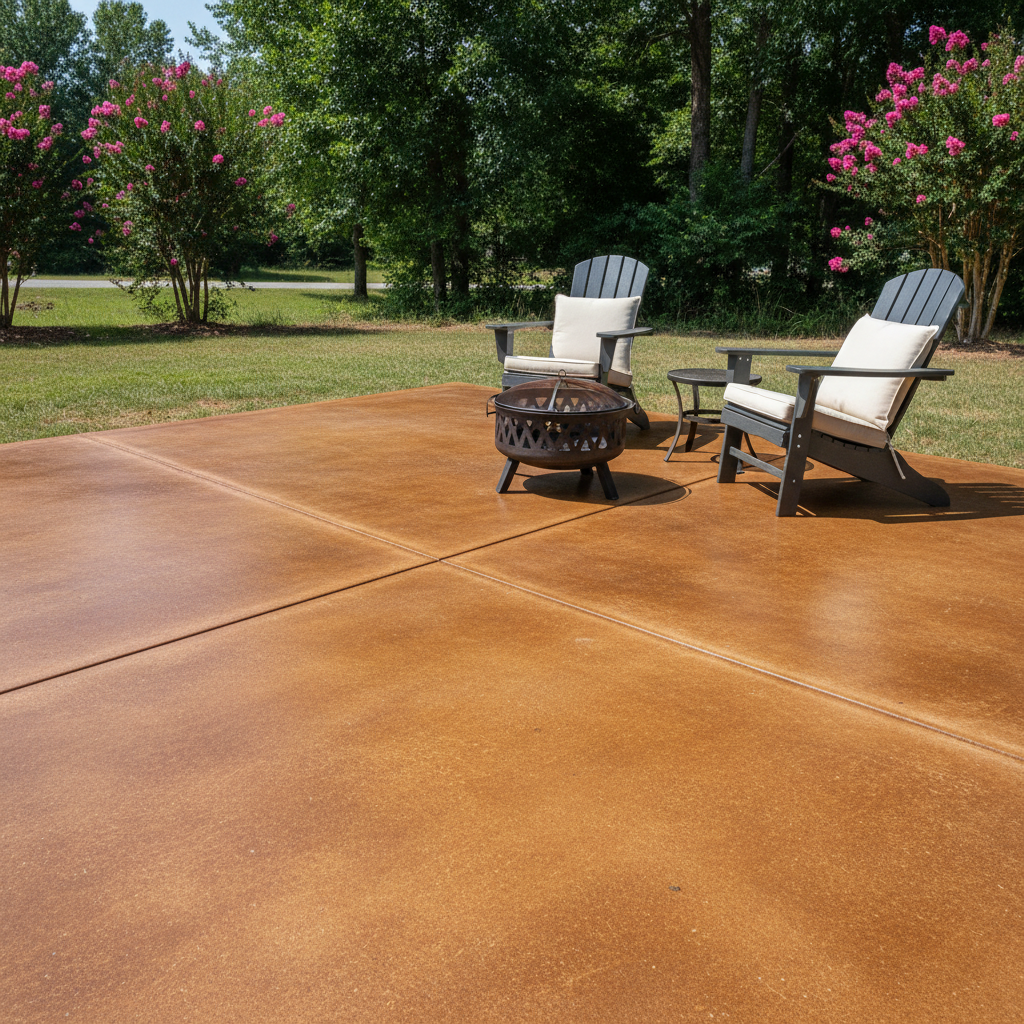
You've invested in stained concrete, whether it's your patio, garage floor, or even inside your home. It looks fantastic, right? But here's the deal: even the toughest concrete needs some looking after, especially with the kind of weather we get here in Olive Branch. I've seen too many beautiful jobs go dull or get damaged because folks didn't know how to properly maintain them. Don't let that happen to your concrete!
Extend That Beautiful Finish
The biggest thing you can do to extend the life of your stained concrete is protect its sealer. Think of the sealer as the clear coat on your car; it takes the beating so the color underneath doesn't. For outdoor surfaces, especially those exposed to our hot Mississippi sun and the occasional heavy downpour, you're fighting UV rays and moisture. Indoors, it's more about foot traffic and spills.
First off, keep it clean. Dirt and grit act like sandpaper, slowly wearing down that sealer. Sweep or blow off outdoor areas regularly. For indoor floors, a soft dust mop works wonders. When you do wash it, use a mild, pH-neutral cleaner. Harsh chemicals, especially anything with ammonia or bleach, can strip or dull your sealer over time. I always tell my customers to think simple: a little dish soap and water often does the trick. Just make sure to rinse well and let it dry completely.
For outdoor patios and driveways, especially if they're under direct sun all day, consider reapplying a fresh coat of sealer every 2-3 years. It's not a huge job, and it'll make a world of difference in keeping that color vibrant and protected from our intense summer heat. Here at The Branch Concrete, we've seen how much longer a well-maintained sealer lasts, even with the humidity and temperature swings we get around here.
Regular Maintenance: What It Looks Like
So, what's a regular maintenance routine look like? It's pretty straightforward, honestly.
- Daily/Weekly: Sweep or dust mop. If it's an outdoor area, a quick sweep or leaf blower to get rid of debris.
- Monthly/Quarterly: Mop with that mild cleaner I mentioned. For outdoor surfaces, a good rinse with a hose and maybe a soft brush for stubborn spots. Don't use a pressure washer too close or too strong, you can damage the sealer.
- Annually: Inspect your sealer. Look for dull spots, minor scratches, or areas where the water doesn't bead up like it used to. This is your cue that it might be time for a touch-up or a fresh coat of sealer.
- Every 2-3 Years (Outdoor): Seriously consider reapplying a quality sealer. It's preventative maintenance that saves you money in the long run.
One thing I've noticed around Olive Branch, particularly in the older subdivisions with mature trees, is that falling leaves and acorns can really stain concrete if they're left there wet for too long. Keep those cleared off, especially after a good rain.
Warning Signs You Shouldn't Ignore
Your concrete will tell you when it needs help, you just have to know what to look for. Don't wait until it's a major problem.
- Dullness or Fading: If your vibrant stain is starting to look washed out or dull, especially in high-traffic areas or spots with direct sun exposure, your sealer is probably worn down. This means the concrete itself is now exposed and vulnerable.
- Scratches and Abrasions: Minor scratches are normal, but if you're seeing deeper gouges or areas where the stain itself seems to be coming off, that's a red flag.
- Peeling or Flaking Sealer: This is a clear sign the sealer has failed. It could be due to improper application initially, or just old age and wear.
- Moisture Penetration: If water soaks into the concrete instead of beading up on the surface, your sealer isn't doing its job anymore. This is a big one, especially with our humid climate; you don't want water getting into the concrete and causing issues.
- Stains That Won't Come Out: If a spill penetrates and leaves a permanent mark, your concrete isn't sealed properly.
When to Call a Professional
Look, a lot of this maintenance you can handle yourself. But there are times when it's best to call in someone who knows what they're doing. If you're seeing widespread peeling, significant fading, or deep damage, trying to fix it yourself might make it worse. Re-sealing large areas or repairing significant damage requires specific products and techniques to ensure a uniform, lasting finish.
If you're unsure about what kind of sealer to use, or how to properly prep the surface for a new coat, give us a shout. We're happy to give you advice or come out and take a look. Sometimes, a small repair now can prevent a much bigger, more expensive problem down the road. We're here to help keep your stained concrete looking its best, so you can enjoy it for years to come.