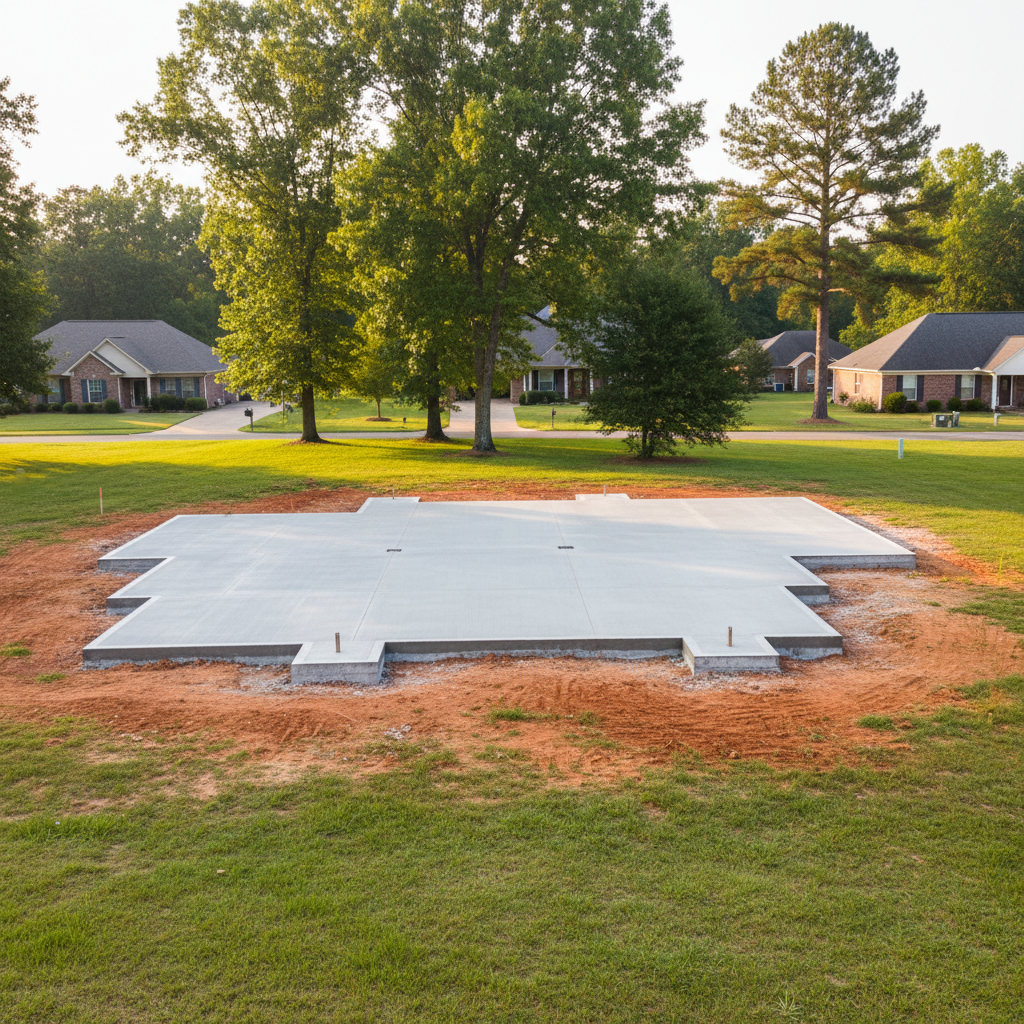
Ever walk into a room and just get that feeling something's not quite right? Maybe a door sticks, or you spot a little crack you swear wasn't there last week. When we're talking about your home's foundation here in Olive Branch, those little things can actually be pretty big signals. I've been working with concrete around this area for years, and I can tell you, our local soil conditions — especially that expansive clay we've got in places like the Goodman Road corridor — really put foundations to the test.
What's Your Foundation Trying to Tell You?
Your foundation is the backbone of your house. If it's having problems, well, your whole house feels it. Here's what I usually tell folks to keep an eye out for:
- Cracks in Walls or Ceilings: We're not just talking tiny hairline cracks from normal settling. Look for bigger ones, especially if they're diagonal or zig-zagging. If you see them running from door frames or window corners, that's a definite red flag.
- Sticking Doors and Windows: If doors suddenly won't close right, or windows are a struggle to open, it's often because the frame has shifted along with the foundation.
- Uneven Floors: You might notice this when you roll a toy car across the living room and it veers off course, or if you just feel like you're walking uphill in your own kitchen.
- Gaps Around Window and Door Frames: If the trim is pulling away from the wall, or you can actually see light through a gap, that's a clear sign of movement.
- Cracks in the Foundation Itself: Go outside and take a walk around your house. Look at the concrete foundation walls. Horizontal cracks, stair-step cracks in brick mortar, or wide vertical cracks are absolutely something you should get checked out.
- Water in the Basement or Crawl Space: This isn't always a direct foundation issue, but water can definitely weaken soil and lead to foundation problems. If you're getting water, you've got a problem that needs fixing, period.
We see a lot of these issues in older homes, sure, but even newer construction isn't immune. That's especially true with how much the ground can shift with our wet winters and dry summers. That clay soil expands when it's wet and shrinks when it's dry, and that constant movement can put a real strain on a foundation.
Why Local Expertise Matters for Foundation Work
You wouldn't ask a desert landscaper to design a garden for a swamp, would you? The same idea applies to foundations. What works in Arizona isn't necessarily going to cut it here in Olive Branch. We've got specific challenges:
- Our Soil: I mentioned the expansive clay. Understanding how it behaves is crucial for diagnosing problems and recommending the right fix. You really need someone who knows how to deal with that particular beast.
- Local Building Codes: These codes are often written with local conditions in mind. A contractor who's been working here for a while knows the ins and outs, believe me.
- Climate Patterns: Our freeze-thaw cycles, heavy rains, and periods of drought all impact foundations. An experienced local contractor understands these patterns and how they contribute to foundation stress.
- Common Local Issues: We see certain types of foundation problems more often than others. Knowing what to look for and having experience with those specific fixes means a more accurate assessment and, ultimately, a better solution for you.
When you're dealing with something as critical as your home's foundation, you don't want a one-size-fits-all approach. You want someone who knows the lay of the land, literally. Someone who's seen the homes in your neighborhood — whether it's the older, established areas or the newer developments — and understands the typical issues they face.
At The Branch Concrete, we've helped plenty of folks right here in Olive Branch figure out what's going on with their foundations. It's not about scaring you, it's about being informed. Catching these things early can often mean a simpler, less expensive repair. Waiting too long can turn a small crack into a major structural headache. So, if you're seeing any of these signs, don't just hope it goes away. Get it checked out. Your home will thank you for it.