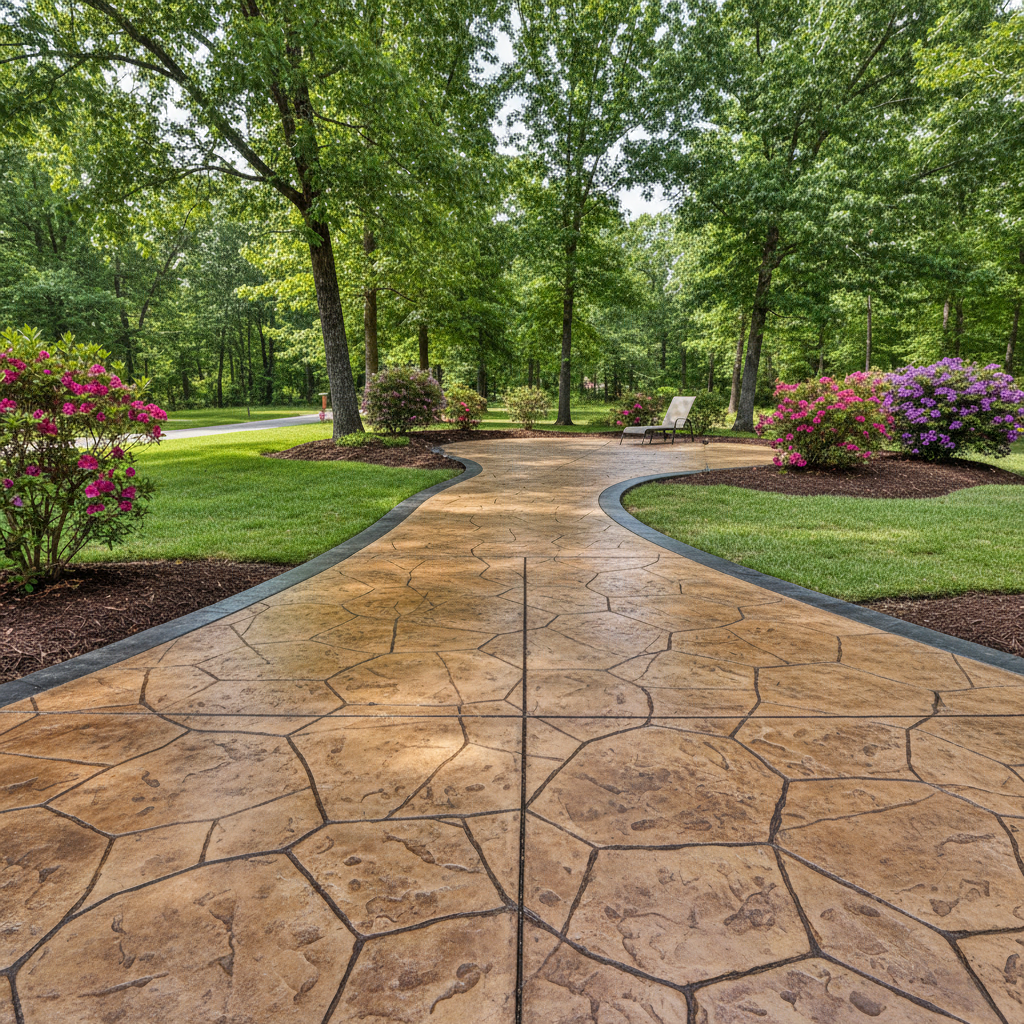
So, you've put money into decorative concrete – maybe it's a stamped patio, a stained driveway, or a polished floor right inside your Olive Branch home. It looks amazing, really boosts curb appeal, and naturally, you want to keep it that way for the long haul. That's smart thinking, if you ask me. I've honestly seen too many folks let their beautiful concrete go downhill just because they didn't know a few simple tricks. Let's talk about what you really need to do.
Make Your Decorative Concrete Last Longer
The biggest thing you can do to protect your decorative concrete, especially here in Mississippi with our crazy weather, is to seal it properly. Think of sealer like sunscreen for your concrete. It protects against UV rays that can fade colors, moisture that might lead to efflorescence or freeze-thaw damage, and just general wear and tear.
For outdoor spots like patios and driveways, I usually suggest resealing every two to three years. If it's a high-traffic area, or gets a ton of direct sun, you might even want to do it yearly. How do you know if it's time? Just pour a little water on the surface. If it beads up nicely, your sealer is still doing its job. But if it soaks in and darkens the concrete, well, it's time to reseal. Don't put it off, either. That's how small problems turn into big, expensive ones.
Indoors, things are a bit different. Polished concrete floors might need a fresh coat of a protective guard or wax every few years, depending on how much foot traffic they see. Stained floors usually have a good top coat that lasts longer, but you should always clean up spills quickly.
What Does Regular Maintenance Involve?
Keeping your decorative concrete looking good isn't rocket science, but it does need a little attention. For outdoor surfaces, cleaning it regularly is key. I'm talking about sweeping off leaves and dirt, and hosing it down every so often. If you get stubborn stains, a mild detergent and a soft brush usually do the trick. Just stay away from harsh chemicals or pressure washers set too high; those can strip your sealer or even damage the concrete surface itself. We get a lot of red clay around Olive Branch, especially in some of the older neighborhoods, and that stuff can really stain if you let it sit.
For indoor decorative concrete, it's even easier. Regular sweeping or vacuuming, and then damp mopping with a pH-neutral cleaner. Avoid anything acidic or abrasive. Think about what you'd use on a nice tile floor – same idea. Put felt pads on furniture legs to stop scratches, and use walk-off mats at entryways to catch dirt and grit before it gets tracked across your beautiful floors.
One thing I always tell folks: don't let oil or grease sit on your concrete, especially outside. Our Mississippi summers can bake that stuff right in, and it's a real pain to get out. Clean it up as soon as you see it.
Warning Signs of Trouble
Your concrete will usually tell you when something's not quite right. You just have to know what to look for:
- Fading Color: If your colored or stained concrete starts looking dull or patchy, that's a pretty clear sign your sealer is failing, or it's been too long since you put it on.
- Cracking: Small hairline cracks are often normal, especially in bigger slabs, but if you see cracks getting wider, spalling (that's flaking surface), or large chunks breaking off, that's a red flag.
- Pitting or Spalling: This is when the surface starts to flake away or small holes show up. Freeze-thaw cycles can cause it (which we definitely get here), or maybe poor quality concrete, or de-icing salts.
- Efflorescence: Those white, powdery deposits on the surface? That's efflorescence, caused by salts leaching out of the concrete. It's usually harmless but can look pretty bad and means moisture is moving through the slab.
- Excessive Wear: If high-traffic areas look duller or rougher than the rest, your protective layers are wearing thin.
Catching these things early can save you a lot of headache and money down the road. Trust me, I've seen it firsthand.
When to Call a Pro
Look, I'm a big believer in doing it yourself when it makes sense, but some things are just better left to the pros. If you're seeing any of those warning signs I just mentioned – especially significant cracking, spalling, or widespread fading – it's time to give someone like us a call. Don't try to patch a major crack with caulk and hope for the best. It won't work, and you'll likely make it even harder for a professional to fix properly later.
If you're unsure about what kind of sealer to use, or how to get the surface ready for resealing, that's another good reason to reach out. Using the wrong product or putting it on incorrectly can actually do more harm than good. At The Branch Concrete, we've got the experience with all kinds of decorative concrete right here in Olive Branch. We know our climate, we know the products, and we definitely know how to get your concrete looking its best again.
Don't wait until your beautiful decorative concrete turns into an eyesore. A little proactive care and knowing when to get help will keep it looking great for years to come.