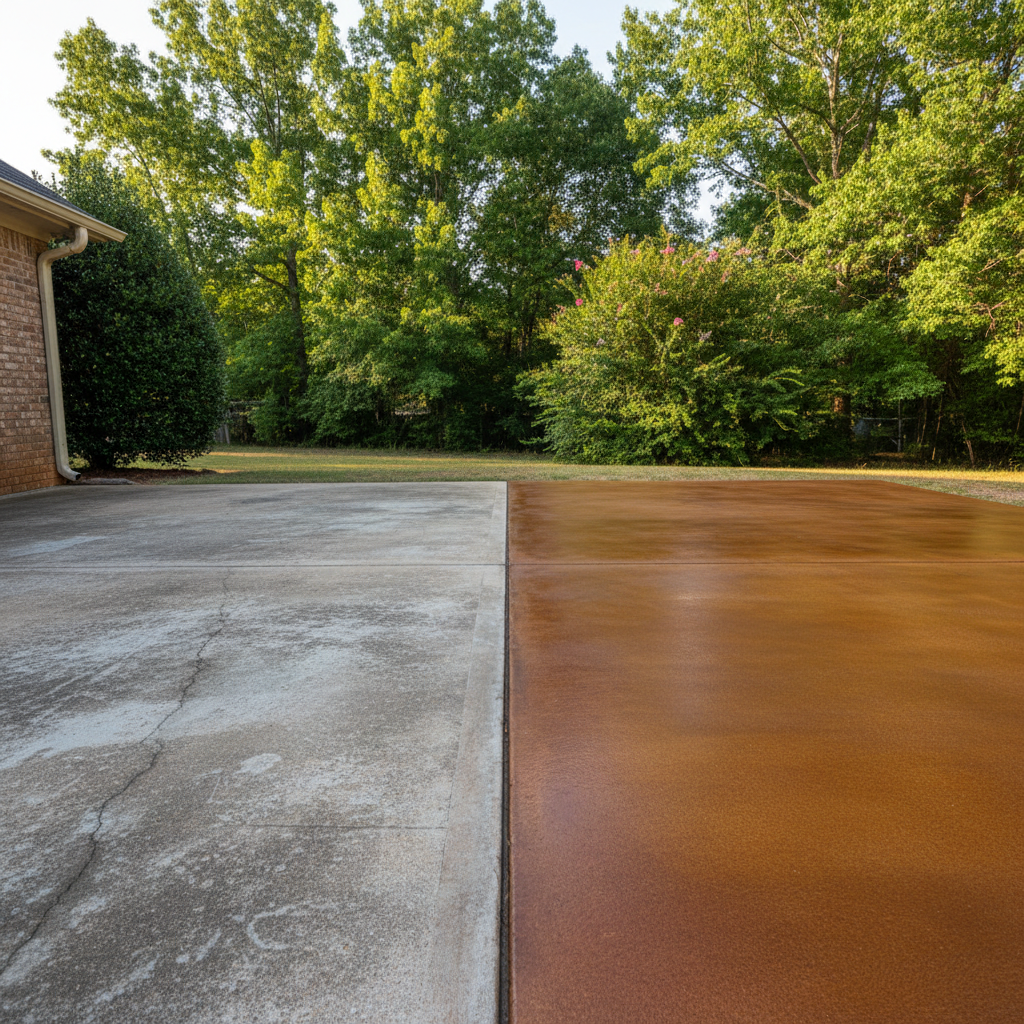
Alright, so you're looking at staining your concrete patio, driveway, or maybe even an indoor floor here in Olive Branch. Smart move. Staining can really transform a plain slab into something beautiful, adding a ton of curb appeal or a custom look inside. But when you start looking into it, you'll quickly find there are a couple of main ways to go: acid stains and water-based stains. People often ask me which one's better, and honestly, it's not a simple one-size-fits-all answer. It really depends on what you're after.
Acid Stains: The Classic, Reactive Look
Let's talk about acid stains first. These have been around for a long time, and they're what a lot of folks picture when they think of stained concrete. Acid stains aren't really a 'stain' in the traditional sense. Instead, they're a mixture of acidic solutions, metallic salts, and water. When you put them on concrete, they react chemically with the free lime and minerals in the concrete itself. This reaction creates a translucent, mottled, and unique color effect that's permanently embedded in the surface.
What I love about acid stains is that every single job is one-of-a-kind. You get these beautiful, earthy tones — browns, tans, greens, and blues — that look really natural. It's almost like a stone or leather finish. You can't really predict the exact outcome, which is part of its charm. It's not a uniform, painted-on look. Because it's a chemical reaction, it won't chip, peel, or fade like a paint would. That's a huge plus for durability.
However, there are some downsides. The color palette is pretty limited to those natural, earthy tones. If you want bright reds or vibrant blues, acid stain isn't your guy. The application process can also be a bit more involved. You've got to neutralize the acid after it reacts, and it can be tricky to get consistent results if the concrete itself isn't consistent. Old concrete, new concrete, patches, previous spills — all these things can affect the final color. Also, because it reacts with the concrete, it doesn't work on all surfaces, especially if the concrete has a sealer or a lot of contaminants.
Water-Based Stains: Versatility and Predictability
Now, on to water-based stains. These are a newer option, and they've really come a long way. Unlike acid stains, water-based stains don't react chemically with the concrete. Instead, they contain finely ground pigments that penetrate the concrete's pores and deposit color. Think of it more like a very thin, translucent paint that soaks in rather than sitting on top.
The biggest advantage of water-based stains is the color range. You can get pretty much any color under the sun — vibrant blues, deep reds, even white or black. If you're trying to match a specific color scheme for your outdoor living space or want something really bold, water-based is the way to go. They also tend to be more consistent in color application, so if you're looking for a uniform look, these are easier to control. Plus, they're generally easier to apply for a DIYer, though I still recommend calling The Branch Concrete for a professional finish. They're also much safer to work with since there are no harsh acids to neutralize.
The main drawback? Durability can be a bit less than acid stains, especially in high-traffic areas or if exposed to the harsh Mississippi sun and humidity year-round. While they penetrate, they don't become one with the concrete in the same way an acid stain does. They can show wear over time, and if not sealed properly, they might fade or scratch. You'll definitely need a good quality sealer on top, and that sealer will need maintenance.
Which One Should You Choose for Olive Branch?
Here in Olive Branch, we deal with some pretty intense weather. Hot, humid summers, occasional freezes, and plenty of rain. That's why durability and proper sealing are key, no matter which stain you pick. We also see a lot of homes in neighborhoods like the Villages of Church Road or Plantation Lakes that have concrete patios and driveways that are exposed to direct sun for most of the day.
If you're after a natural, earthy, mottled look that's incredibly durable and unique, and you're okay with a limited color palette, an acid stain is probably your best bet. It's a classic for a reason, and once it's sealed, it holds up beautifully to our weather. It's a permanent color change that really becomes part of the concrete.
If you need a specific color, something vibrant, or a more uniform appearance, then water-based stains are the way to go. They offer incredible flexibility in design. Just make sure you invest in a high-quality sealer and commit to maintaining it. That sealer is what protects the pigment from our sun and keeps it looking fresh.
Ultimately, both options can give you a fantastic result. It really comes down to the look you're trying to achieve and how much maintenance you're willing to do. For most outdoor applications where folks want that rich, deep, natural character that lasts, I often lean towards acid stains. But if you've got a specific vision for color, water-based can absolutely deliver. Give us a call at The Branch Concrete, and we can walk you through samples and help you figure out what's going to work best for your home and your budget. We've done plenty of both and can show you what to expect.